BeaCapra AHK-Cu — Skin Matrix
Frequently Bought Together


AHK-Cu: Hair and Skin Renewal Copper Peptide
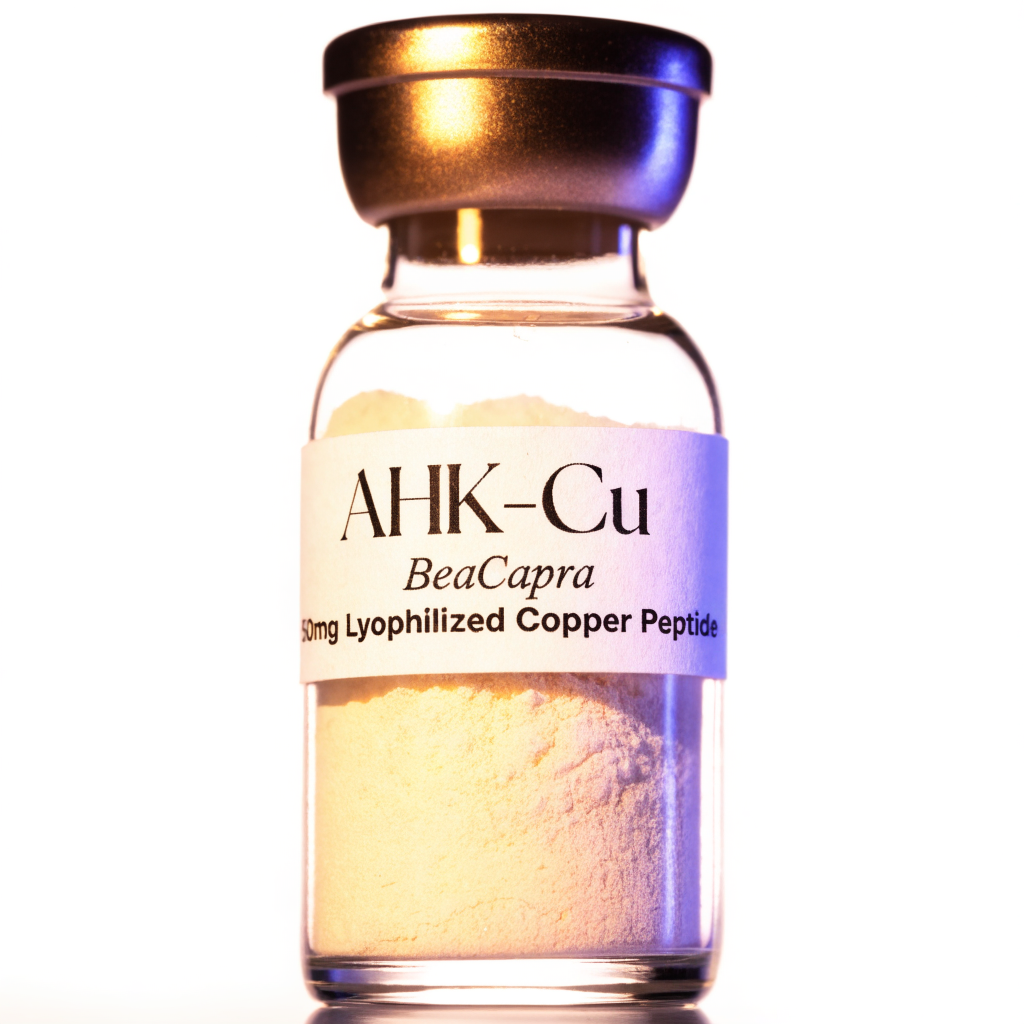
AHK-Cu (Alanine-Histidine-Lysine Copper) is a tripeptide-copper complex structurally related to GHK-Cu, with distinct research applications in hair follicle biology and dermal matrix remodeling. Each vial contains 50mg of lyophilized peptide at ≥99% purity. The AHK sequence demonstrates enhanced affinity for specific dermal receptors compared to other copper peptide variants, making it a valuable tool in skin and hair research.
Published research has examined AHK-Cu's role in stimulating dermal papilla cell proliferation—the specialized cells at the base of hair follicles that regulate hair growth cycling. Studies have also investigated its effects on extracellular matrix protein production, including collagen types I and III, elastin, and proteoglycans critical to skin structural integrity.
AHK-Cu's copper-binding mechanism supports enzymatic processes essential for connective tissue cross-linking, including lysyl oxidase activity. Research applications include investigations into follicular neogenesis, dermal wound repair, and age-related changes in skin extracellular matrix composition.
Storage: Store lyophilized peptide at -20°C. Reconstitute with sterile water and store at 2-8°C. Use within 30 days. Protect from light and oxidation.
For research use only. Not for human consumption. This product is not a drug, supplement, food, or cosmetic and may not be misbranded, misused, or mislabeled as such.
Research-Documented Benefits
- Hair Growth Stimulation — AHK-Cu (Ala-His-Lys-Cu) has shown promotion of hair follicle enlargement and extended anagen phase in dermal papilla cell studies.
- Skin Regeneration — Research demonstrates enhanced fibroblast proliferation and extracellular matrix production, supporting dermal repair and rejuvenation.
- Collagen Synthesis — Similar to GHK-Cu, AHK-Cu promotes collagen production in skin fibroblast cultures, contributing to improved skin thickness and elasticity.
- Copper Delivery — Serves as an effective copper transport peptide, delivering Cu2+ ions essential for numerous enzymatic processes including lysyl oxidase (collagen cross-linking).
- Antioxidant Support — Copper-dependent superoxide dismutase activation provides cellular protection against oxidative stress-mediated damage.
Mechanism of Action
AHK-Cu (Ala-His-Lys with Cu2+) is a tripeptide-copper complex structurally related to GHK-Cu, with the glycine residue replaced by alanine. This substitution provides distinct receptor binding properties while maintaining copper transport capability.
Primary Pathways
- Copper-Dependent Enzyme Activation — Like GHK-Cu, AHK-Cu delivers copper ions to activate lysyl oxidase, superoxide dismutase, and cytochrome c oxidase, supporting collagen cross-linking and antioxidant defense.
- Dermal Papilla Stimulation — Research shows AHK-Cu stimulates dermal papilla cells, the signaling centers at the base of hair follicles that control hair growth cycling.
- Wnt/Beta-Catenin Pathway — Studies suggest activation of Wnt signaling in hair follicle stem cells, promoting transition from telogen (resting) to anagen (growth) phase.
- ECM Remodeling — Promotes synthesis of collagen, fibronectin, and other extracellular matrix components essential for dermal structural integrity.
AHK-Cu's mechanism overlaps significantly with GHK-Cu but shows enhanced specificity for dermal and follicular targets, making it a subject of focused research in dermatological applications.
Research Protocol Guidelines
All protocols described are for in vitro and in vivo research purposes only. Not for human use.
Reconstitution
Reconstitute lyophilized AHK-Cu with bacteriostatic water. Similar to GHK-Cu, the reconstituted solution may display a blue tint from the copper ion complex.
Research Dosing (Preclinical Literature)
- Topical (dermal): 0.01-0.5% in cream or serum formulations for skin and hair follicle research
- In vitro: 1-50 nM in dermal papilla cell culture and hair follicle organ culture models
- Comparative studies: Often studied alongside GHK-Cu at equimolar concentrations to compare efficacy in dermal and follicular assays
Storage
Store lyophilized powder at -20°C. Reconstituted at 2-8°C, use within 14 days. Handle similarly to GHK-Cu with attention to minimizing oxidation of the copper complex.
Safety & Handling Information
For research use only. Not intended for human or veterinary diagnostic or therapeutic use.
Storage Requirements
- Lyophilized: -20°C, desiccated, protected from light
- Reconstituted: 2-8°C, use within 14 days
Preclinical Safety Profile
AHK-Cu shares a safety profile comparable to GHK-Cu. As a naturally derived copper tripeptide, it demonstrates low immunogenicity and minimal cytotoxicity at standard research concentrations in dermal and follicular cell culture models.
Known Considerations
- Same copper-related considerations as GHK-Cu: potential for copper accumulation in chronic high-dose studies
- Dermal application studies show excellent local tolerability
- Limited published toxicology data compared to GHK-Cu; extrapolate with appropriate caution
Handling
Standard laboratory PPE. Same copper-related handling precautions as GHK-Cu.
Frequently Asked Questions
What is AHK-Cu?
AHK-Cu (Ala-His-Lys with Cu2+) is a tripeptide-copper complex structurally related to GHK-Cu. The alanine substitution at the first position provides distinct receptor binding properties, with research showing particular affinity for dermal papilla cells involved in hair growth regulation.
Can AHK-Cu and GHK-Cu be used together?
Both peptides are frequently studied in comparative assays. They share the copper delivery function but may activate different downstream pathways in skin and hair follicle tissue. Combination research is published, though separate preparations are recommended.
Is the copper in AHK-Cu safe for topical research?
Copper peptides have been used in cosmetic and dermatological research for decades. At standard research concentrations (0.01-0.5%), copper peptides show excellent tolerability in dermal models. Copper toxicity is only a concern at significantly higher concentrations or in systemic chronic studies.
What makes AHK-Cu different from free copper supplementation?
Free copper ions are poorly absorbed and potentially toxic at effective concentrations. AHK-Cu provides a controlled, bioavailable delivery mechanism that targets copper to specific enzyme systems without the oxidative stress associated with unbound copper(II).
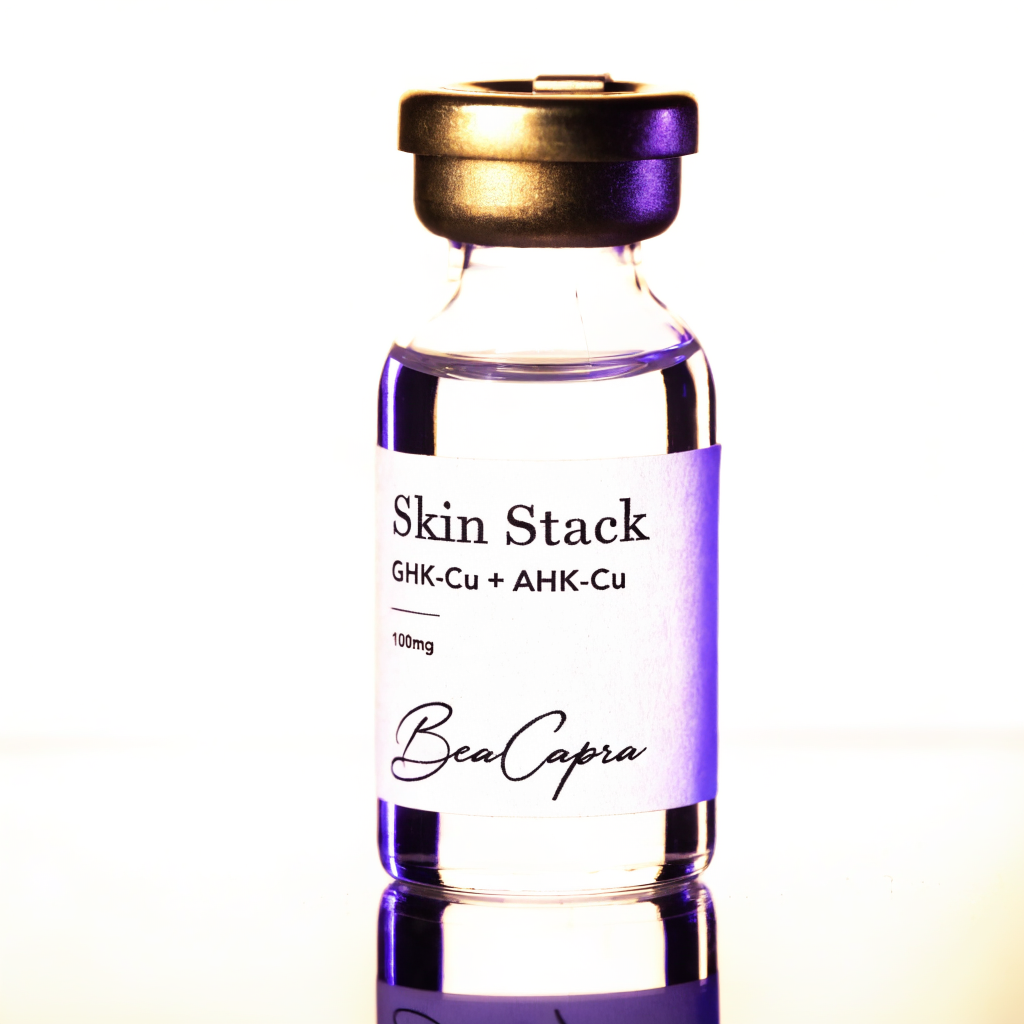
Related formulas
Customer Reviews
Exceptional purity and fast shipping
Third-party COA verified at 99.1% purity. Arrived in 2 days with proper cold packaging. The documentation included was thorough and professional. Will be ordering again for our lab.
Best supplier I've found
After trying several suppliers, BeaCapra consistently delivers the highest quality compounds. The subscribe & save option is a great value, and their customer support team answered all my questions promptly.
Great product, COA checks out
Ran our own HPLC analysis and confirmed the purity claims. Packaging was secure and discreet. Only minor note — would love to see more size options for some of the newer compounds. Otherwise excellent.
Subscribe & save is the way to go
The 15% discount on subscription makes this the most competitive pricing I've found for research-grade compounds at this purity level. Auto-delivery every 30 days has been seamless. Highly recommend.
Exactly what our research team needed
We've been sourcing from BeaCapra for our university lab and the consistency batch-to-batch is impressive. Every order comes with a COA and the compounds are properly lyophilized. Professional operation all around.
Questions About BeaCapra AHK-Cu — Skin Matrix
General Questions
Everything you need to know about BeaCapra research peptides, ordering, shipping, and our commitment to quality.
Still have questions? Our research specialists are here to help.
Contact Us