BeaCapra NAD+ — Cellular Longevity
Frequently Bought Together


NAD+: Coenzyme for Cellular Energy and Longevity Research
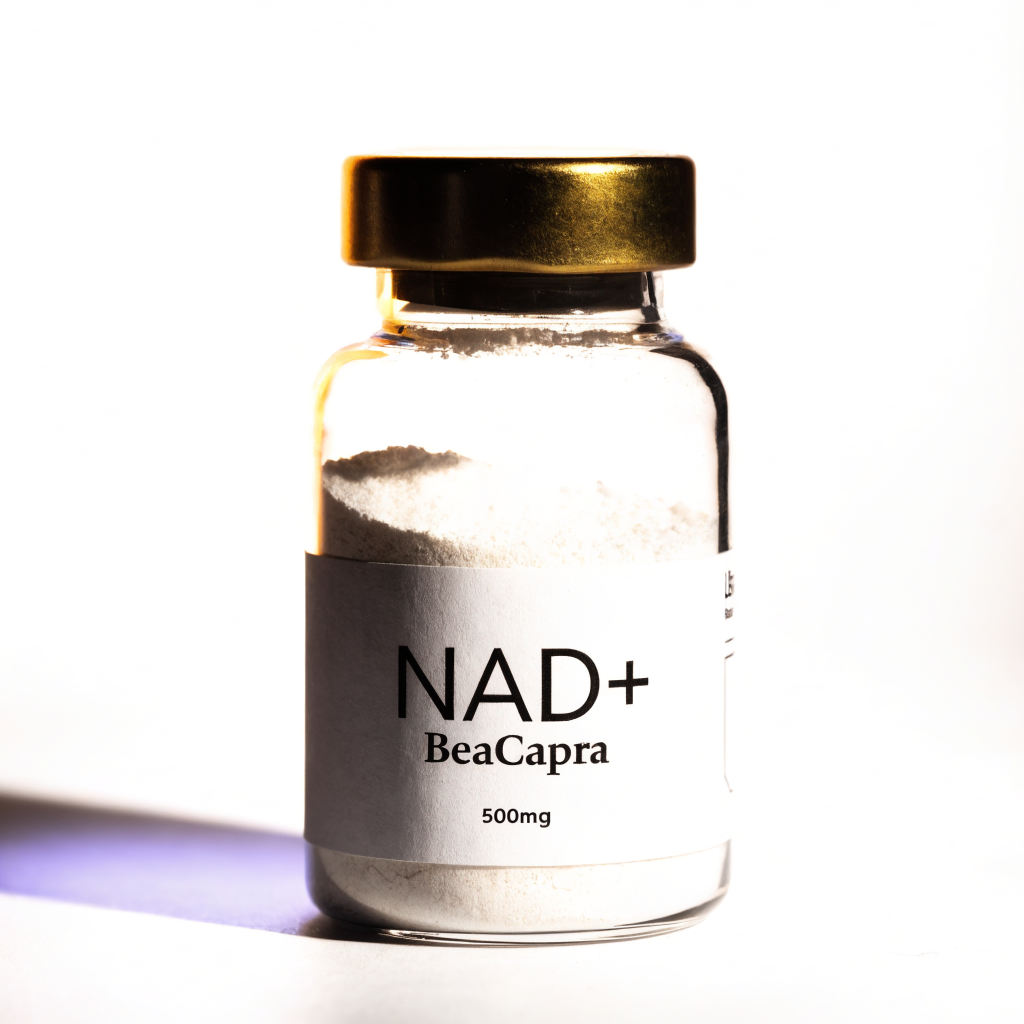
Nicotinamide Adenine Dinucleotide (NAD+) is a critical coenzyme found in every living cell, essential for over 500 enzymatic reactions including energy metabolism, DNA repair, and epigenetic regulation. With a molecular weight of 663.43 g/mol and the molecular formula C21H27N7O14P2, NAD+ serves as a central metabolic hub connecting nutrition, cellular stress responses, and aging processes. Each vial contains 500mg of lyophilized NAD+ at ≥99% purity.
Published research has identified NAD+ decline as a hallmark of aging, with levels decreasing by approximately 50% between ages 40 and 60. This decline is implicated in mitochondrial dysfunction, genomic instability, and age-related metabolic disorders. Studies by researchers including Dr. David Sinclair at Harvard have demonstrated that NAD+ supplementation in animal models can reverse age-related cellular dysfunction and extend healthspan.
NAD+ is a required substrate for sirtuins (SIRT1-7), PARP enzymes (DNA repair), and CD38 (immune function). Research applications include cellular aging, metabolic regulation, circadian rhythm biology, neuroprotection, and DNA damage repair pathways. The 500mg format supports extended research protocols.
Storage: Store lyophilized powder at -20°C. Reconstitute with sterile water and store at 2-8°C. Use within 14 days of reconstitution. Protect from light and heat.
For research use only. Not for human consumption. This product is not a drug, supplement, food, or cosmetic and may not be misbranded, misused, or mislabeled as such.
Research-Documented Benefits
- Cellular Energy Production — NAD+ is an essential coenzyme in glycolysis, the TCA cycle, and oxidative phosphorylation, directly supporting ATP generation in every cell.
- DNA Repair — Required substrate for PARP enzymes (poly-ADP-ribose polymerases), which detect and repair single-strand DNA breaks.
- Sirtuin Activation — NAD+ is the obligate co-substrate for all seven mammalian sirtuins, a family of deacetylases linked to longevity, metabolic regulation, and stress resistance.
- Age-Related Decline — Endogenous NAD+ levels decrease substantially with age; supplementation research shows restoration of youthful metabolic parameters in aged animals.
- Neuroprotection — Studies demonstrate protection against neurodegenerative processes via improved mitochondrial function and reduced oxidative stress in neural tissue.
Mechanism of Action
NAD+ (Nicotinamide Adenine Dinucleotide) is a critical coenzyme present in every living cell, functioning as an electron carrier in over 500 enzymatic reactions and as a substrate for signaling enzymes.
Primary Pathways
- Redox Reactions — Accepts and donates electrons (NAD+/NADH cycling) in glycolysis, the tricarboxylic acid cycle, and oxidative phosphorylation, directly driving ATP synthesis.
- Sirtuin Co-Substrate — All seven mammalian sirtuins (SIRT1-7) require NAD+ to catalyze protein deacetylation and ADP-ribosylation, regulating gene expression, DNA repair, metabolism, and stress resistance.
- PARP Activation — Poly(ADP-ribose) polymerases consume NAD+ as they poly-ADP-ribosylate proteins at DNA damage sites, initiating repair cascades. Excessive DNA damage can deplete cellular NAD+ pools.
- CD38/CD157 — These ectoenzymes consume NAD+ to generate cyclic ADP-ribose, a calcium-mobilizing second messenger. CD38 activity increases with age and is a major driver of age-related NAD+ decline.
NAD+ decline is now recognized as a hallmark of aging. Its depletion impairs energy metabolism, DNA repair, and sirtuin-mediated stress responses simultaneously, creating cascading cellular dysfunction.
Research Protocol Guidelines
All protocols described are for in vitro and in vivo research purposes only. Not for human use.
Reconstitution
Reconstitute lyophilized NAD+ with bacteriostatic water or sterile saline. NAD+ is freely soluble in water. Prepare solutions immediately before use when possible.
Research Dosing (Published Literature)
- IV infusion studies: 250-750 mg administered via slow intravenous infusion (2-4 hours) in clinical research settings
- Subcutaneous: 50-200 mg in subcutaneous injection protocols
- In vitro: 0.5-5 mM in cell culture for sirtuin activation and metabolic assays
- Preclinical (rodent): 100-500 mg/kg IP for acute NAD+ repletion studies
Storage
Store lyophilized NAD+ at -20°C protected from light and moisture. NAD+ is hygroscopic and degrades in aqueous solution; reconstituted preparations should be used within 24 hours or aliquoted and frozen at -80°C. Solution pH should be maintained near physiological (7.0-7.4).
Safety & Handling Information
For research use only. Not intended for human or veterinary diagnostic or therapeutic use.
Storage Requirements
- Lyophilized: -20°C, desiccated, protected from light and moisture
- Reconstituted: use within 24 hours or aliquot and freeze at -80°C
- NAD+ is hygroscopic—minimize air exposure during weighing and reconstitution
Safety Profile
NAD+ is a naturally occurring coenzyme present in every living cell. Exogenous supplementation via IV infusion in clinical research has demonstrated a generally safe profile, though infusion-related events are well-documented.
Known Considerations
- Rapid IV infusion may cause chest tightness, nausea, lightheadedness, and abdominal cramping—slow infusion rates (2-4 hours) minimize these effects
- NAD+ consumption by PARP during DNA damage repair can deplete cellular pools—exogenous NAD+ may mask DNA damage signals in genotoxicity studies
- Sirtuin activation may alter epigenetic marks in experimental systems
- pH-sensitive: maintain solutions near physiological pH (7.0-7.4) to prevent degradation
Handling
Standard laboratory PPE. NAD+ powder is an irritant; avoid inhalation. Work in a fume hood when weighing bulk quantities.
Frequently Asked Questions
What is the difference between NAD+ and its precursors (NMN, NR)?
NAD+ is the active coenzyme itself. NMN (nicotinamide mononucleotide) and NR (nicotinamide riboside) are biosynthetic precursors that cells convert into NAD+ through salvage pathway enzymes. Direct NAD+ administration bypasses these conversion steps, though NAD+ has limited oral bioavailability, which is why precursors are often used in oral research while direct NAD+ is used in parenteral studies.
Why does NAD+ decline with age?
Age-related NAD+ decline results from increased consumption (rising PARP activity from accumulated DNA damage, increased CD38 expression with chronic inflammation) combined with decreased synthesis (reduced NAMPT expression in aging tissues). This creates a supply-demand imbalance that progressively depletes cellular NAD+ pools.
Why must NAD+ solutions be prepared fresh?
NAD+ is chemically unstable in aqueous solution, undergoing hydrolysis at the pyridinium-ribose glycosidic bond. The degradation rate is pH-dependent and accelerated by heat, light, and non-physiological pH. Fresh preparation ensures delivery of intact, biologically active NAD+ coenzyme.
What are the seven sirtuins and why do they matter?
SIRT1-7 are NAD+-dependent deacetylases located in different cellular compartments (nucleus, cytoplasm, mitochondria). They regulate gene expression, DNA repair, metabolism, inflammation, and stress resistance. Sirtuin activity directly depends on NAD+ availability, making NAD+ a rate-limiting factor for this entire protective enzyme family.
Related formulas


Customer Reviews
Exceptional purity and fast shipping
Third-party COA verified at 99.1% purity. Arrived in 2 days with proper cold packaging. The documentation included was thorough and professional. Will be ordering again for our lab.
Best supplier I've found
After trying several suppliers, BeaCapra consistently delivers the highest quality compounds. The subscribe & save option is a great value, and their customer support team answered all my questions promptly.
Great product, COA checks out
Ran our own HPLC analysis and confirmed the purity claims. Packaging was secure and discreet. Only minor note — would love to see more size options for some of the newer compounds. Otherwise excellent.
Subscribe & save is the way to go
The 15% discount on subscription makes this the most competitive pricing I've found for research-grade compounds at this purity level. Auto-delivery every 30 days has been seamless. Highly recommend.
Exactly what our research team needed
We've been sourcing from BeaCapra for our university lab and the consistency batch-to-batch is impressive. Every order comes with a COA and the compounds are properly lyophilized. Professional operation all around.
Questions About BeaCapra NAD+ — Cellular Longevity
General Questions
Everything you need to know about BeaCapra research peptides, ordering, shipping, and our commitment to quality.
Still have questions? Our research specialists are here to help.
Contact Us